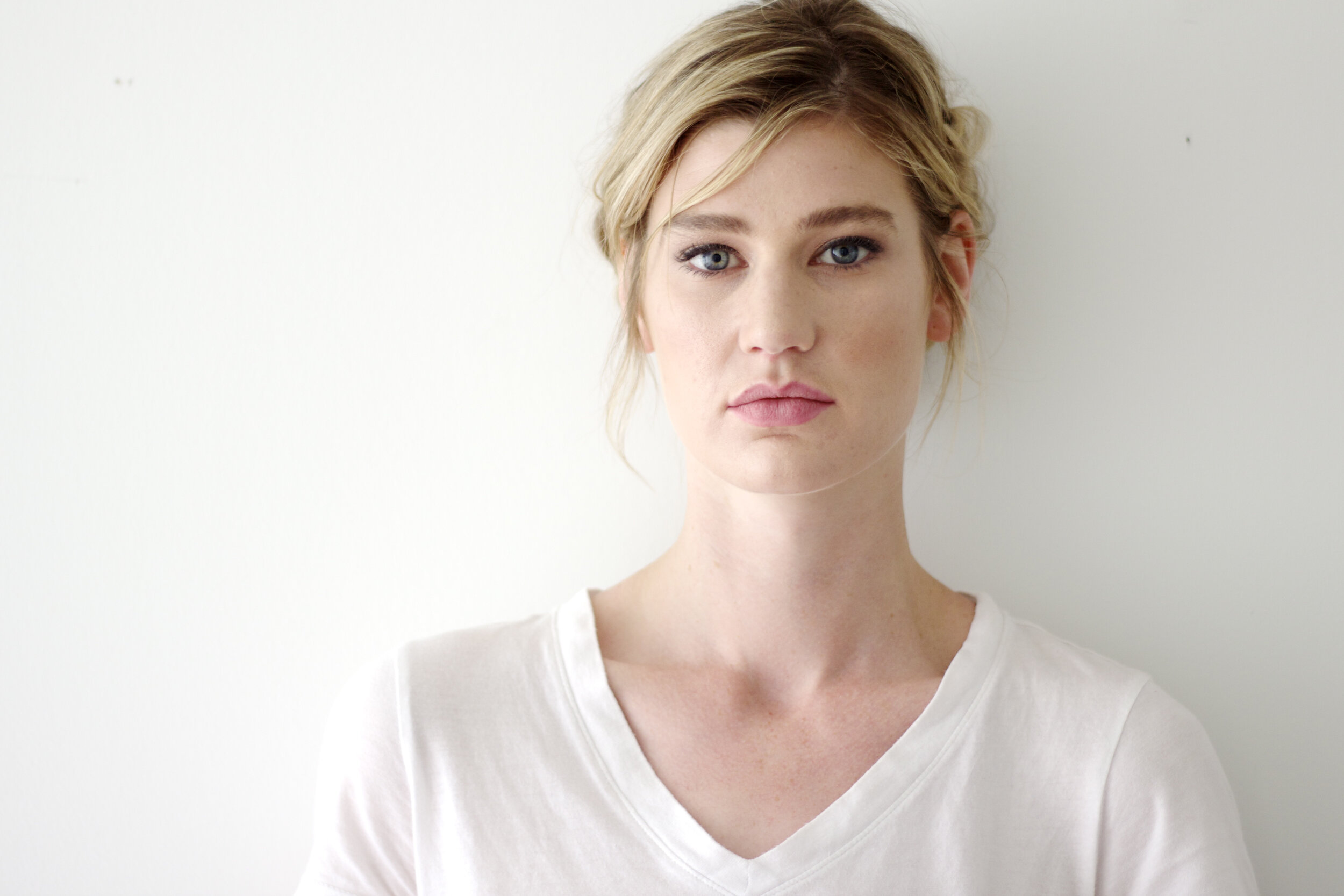
TIFF Rising Star 2013 Alumna Megan Park: Time for Me to Come Home for Christmas

Hallmark

download (2).jpg

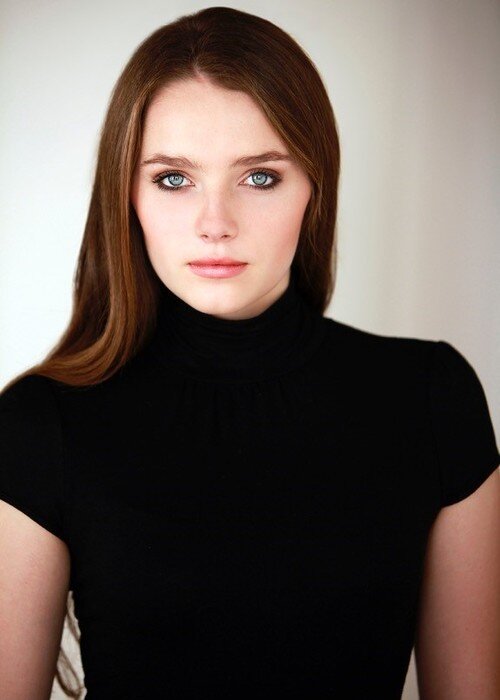
A Canadian born actress, Megan Park is known for her critically acclaimed roles in numerous hit television series and feature films including Aaron Sorkin’s “The Newsroom,” “Central Intelligence,” with Kevin Hart and Dwayne “The Rock” Johnson, and “Charlie Bartlett,” with Robert Downey Jr. She was awarded TIFF’s “Rising Star” for her role in "What If," alongside Daniel Radcliff and Zoe Kazan, but is best known for her starring role on six seasons of the ABC Family hit show “The Secret Life of the American Teenager,” for which she won a People’s Choice Award and Teen Choice Award.

Park’s directorial debut was in 2016 when she wrote and directed the short film, "Lucy in My Eyes," which premiered at the 2017 Austin Film Festival and won the Grand Jury Prize for Best Short. Recently writing a pilot, which CBS studios bought, Park and is now writing a feature film for New Line-Warner Bros. with Shailene Woodley attached as the star. Park also recently co-wrote and co-directed a web series titled, “We’re Adults Now,” with Canadian writer Katie Boland.

An avid director of several music videos, which have grossed more than fifty million views, Park has worked with artists such as Mike Posner, Blackbear, Gucci Mane and Billie Eilish. As an actress, she has two feature films and several projects in production slated for a 2018 release, and she has numerous other writing and directing projects in development.

Source: https://www.hallmarkmoviesandmysteries.com...

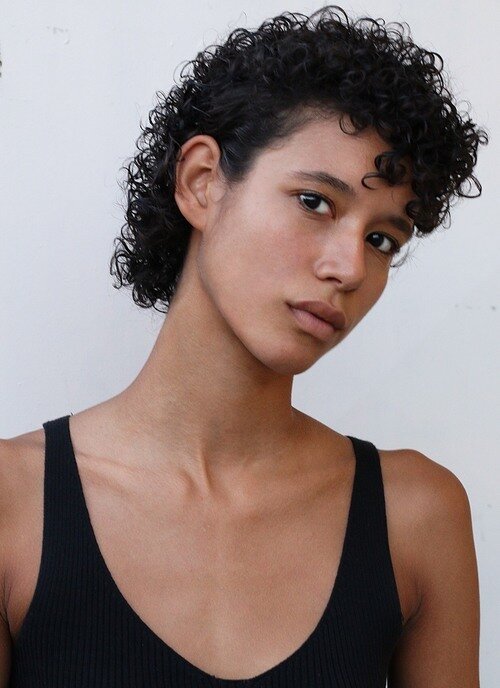
Isabelle Fuhrman, Amy Forsyth and Dilone will headline Lauren Hadaway’s debut feature, “The Novice,” Variety has learned exclusively.

Variety | Dave McNary

CASTINGS

thenoviceisabellefurhman.jpg

Isabelle Fuhrman, Amy Forsyth and Dilone will headline Lauren Hadaway’s debut feature, “The Novice,” Variety has learned exclusively.

Ryan Hawkins of Picture Movers, Steven Sims of H2L Media, Kari Hollend, and Zack Zucker are producing. Al Engemann of Picture Movers, Charlotte Ubben and Michael Tennant of RBF Productions, and Billy Hines and Christopher Hines of H2L Media are executive producing. Production will start in mid-October.

The film tells the story of a college freshman who joins her university’s cutthroat rowing team and undertakes an obsessive journey to make the top varsity boat.

Fuhrman’s credits include “Orphan,” “Down a Dark Hall” and “After Earth.” Forsyth most recently appeared in Amazon’s “Beautiful Boy” and previously starred in NBC’s “Rise” and and Hulu’s “The Path.”

Hadaway, a 2018 Outfest Screenwriting Fellow, is repped by Bellevue Productions. Fuhrman is repped by UTA and attorney Cheryl Snow. Forsyth is repped by Gersh and David Dean Management. Dilone is repped by Framework.

TIFF Rising Star 2015 Alumna Deragh Cambpell: AN INTERVIEW WITH: DERAGH CAMPBELL

October 6, 2019 Toronto Film Critics Association

Anne_At_13000_Feet-1024x682.jpg

“Audrey has become a vessel, a tool we can use to explore different things.”

MS Slavic 7, the crown jewel of this year’s Vancouver International Film Festival’s Future/Present program, is a sly, fleet, alluringly mysterious film about family and history, intimacy and distance. It marks the most recent incarnation of Audrey, a character who has appeared in previous films (Never Eat AloneVeslemøy’s Song) directed by Toronto’s prolific and singular Sofia Bohdanowicz and featuring actor Deragh Campbell. Campbell has played a pivotal role not only in the interpretation of Audrey, but also in the character’s very conception. With MS Slavic 7, the collaboration became so intertwined that Campbell, alongside Bohdanowicz, is credited as actor, co-scenarist, co-producer, co-editor and co-director.

MS Slavic 7 finds Audrey traveling to Harvard University to peruse an archive containing correspondence between poets Józef Wittlin and Zofia Bohdanowiczowa, Audrey’s (and Bohdanowicz’s real-life) great-grandmother, both of whom were Poles in exile, the former in the U.S., the latter in Canada. Audrey doesn’t read Polish, yet her contact with the letters and, eventually, with the man she has translate them, reveals the degree to which she finds solace and meaning in the tactile vestiges of her familial past. Her familial present, meanwhile, is thornier, as is evidenced in scenes in which Audrey attends an anniversary party in Etobicoke and is confronted with a resentful aunt. 

The film’s most captivating scenes find the socially uneasy Audrey either in solitude or negotiating shared space in the Harvard library, where she handles the letters with a quiet, rapturous focus, or in a local restaurant, where she speaks aloud her interpretation of what these letters contain and signify. These monologues represent the moments when MS Slavic 7 most obviously veers into a terrain as close to documentary as fiction, with Campbell’s thoughts and Audrey’s thoughts merging in their fascination with the importance of the letters’ “objecthood” and movement through space to reach their addressees. 

Daughter to four generations of actors, Campbell was born in Toronto, grew up in Stratford and Niagara-on-the-Lake, studied creative writing in Montreal, lived for spells in London and New York, and re-settled in Toronto in 2014. Her filmography includes I Used to Be DarkerIt’s Hard To Be Human, and Kazik Radwanski’s Anne at 13,000 ft., which debuted at this year’s Toronto International Film Festival, where it received an honourable mention in the Platform competition, and which also screened at VIFF. “Because I’ve only been in movies seen largely by cinephiles,” Campbell says, “it probably seems like my filmography is more curated than it actually is.”  Campbell came to her family’s trade via a circuitous route, but forging her own path and becoming a pivotal figure in contemporary Canadian independent cinema has helped her occupy a space that is uniquely hers. 

MS Slavic 7 will open at TIFF Bell Lightbox on October 10. 

Was there a particular point in the process of making MS Slavic 7 at which it became clear that your contribution was going beyond that of an actor or co-scenarist? 

Before we started shooting our roles as co-writers and co-producers were established, but I was the actor and Sofia the director. It was during the editing that Sofia came to me with the realization that, in her own words, she didn’t have all the answers. I came in and joined the editing process two days a week and two months into that Sofia proposed that we now look at the film as being co-directed. Which was very egoless of her and very empowering for me. I’m lucky that on these small, intimate projects I’ve gotten to be very involved in the development of characters. Directors will ask my opinion on a formal decision, say, which isn’t something that usually happens to actors. This isn’t something I would necessarily want on every project. I like the idea that on some projects you can just be an actor, while on others you can contribute in another way. 

I find such arrangements exciting not only because it breaks down seemingly immovable hierarchies within filmmaking or the distribution of credit, but also because this approach to process yields a different product. Even if Sofia were to begin this film with the same concept, even if she were to incorporate the same elements along the way, if she was sorting it all out on her own I don’t think she would have arrived at this result. This applies to all of the Audrey films: without your extra-actorly input, Audrey might not have even become the character who eventually prompted MS Slavic 7

I think Audrey has become a vessel, a tool we can use to explore different things. It’s become a method of channeling. In MS Slavic 7my anxiety from university is probably informing the character, whereas in Sofia’s upcoming short film, Audrey is in the process of grieving a friend, which is something that Sofia was going through last year. The idea that both of us can reflect on different personal experiences, that we’ve created a character that is made up of different elements of two different people, is very interesting to me. I feel like you’re better equipped to tap into your instincts when you’re in dialogue with someone else, whereas when something is just coming out of your head in isolation you can feel very self-conscious. You can shake off some of the desire to impress someone with a polished idea when you’re in conversational mode. 

When you introduced the film here in Vancouver you described it as being very earnest, which struck me as curious. I get it in the sense that Audrey is, in her way, earnest, and the viewer’s perspective is closely hewed to hers. But I’d argue that, in another way, the film is anything but earnest. It conceals and reveals things at strategic moments. It’s playful and even cryptic. I’ve seen it twice now and still find it mysterious. 

I guess I think of Audrey as earnest in her desire to understand things and articulate herself. But that desire is so strong that it inhibits her. That’s actually, for me, the link between my characters in MS Slavic 7 and Anne at 13,000 ft., this desire for experience and meaning being so powerful as to get in one’s way. Maybe if Audrey could relax a little, if she wasn’t so desperate to understand the letters, she would be open to a more emotional experience of them. Just as Anne might be able to get closer to others if she could just stop and truly listen to them for a moment, rather than feel obligated to perform for them, to amp up every interaction. I think Audrey really believes it’s through research that she can become closer to her great-grandmother. If she can articulate her findings, maybe she can connect. I think this is what drives a lot of art, the feeling that if I find a way to really say what I feel then I can connect to others and feel understood. 

In Audrey’s first monologue she talks about the meaning of the letters as being inextricable from their materiality. In the first scene in the archive we see Audrey handling the letters in this very exploratory way, folding and unfolding them, and then these superimposed titles appear, fragments of the letters in translation, like subtitles except no one is speaking. Initially I was wondering if Audrey was gleaning the letters’ contents by osmosis. 

[Laughs] Maybe to some extent she is. 

I’m just thinking about this idea of things you can touch, how we spend time watching Audrey touching these letters whose words she can’t read, while later in the story we learn she’s become intimate with someone we never she her touch. Did you and Sofia talk about the contrast between Audrey’s relationship to objects and to people?

We’re definitely talking about her relationship to people. There is a goal that in the next film she’ll finally get a friend. [Laughs] We also talked about the difference between Audrey’s body language in the first two monologues and the third, where we see her addressing another person, which makes her more self-conscious. We see Audrey’s flow of thoughts being interrupted by having to reckon with another person. Interacting with others is really hard for her because her sense of identity only works in isolation. She has to come to her conclusions privately and then present them to others. I sympathize with this pretty strongly. I think she feels at peace with the letters because they don’t change or react. They’re things she can react to. 

When I first saw MS Slavic 7 I thought Audrey’s first monologue was perhaps you, Deragh, talking to Sofia. It’s only during the third monologue that we realize she’s addressing the translator. Can you talk about the decision to reveal the translator so late in the story? 

In my mind he’s not there for the first two monologues, only the third. But I like hearing people’s responses and learning how the monologues can be read in many different ways. Something that I find really interesting with cinema is that, unless you create these foggy edges to imply a dream sequence, whatever you show on screen is real. Because Audrey is sitting at a table speaking outwardly, we assume this is literally what’s happening. I thought of those first two monologues as a kind of abstract representation of her notebook or thought process. I like how cinema allows you to create a moment that’s abstract and actual at the same time. You can’t choose for it to be one or the other. It’s kind of both and neither. I was an avid reader before I became an avid film-watcher, so these questions remind me of things Anne Carson might do, for example. In Autobiography of Red you don’t know whether this character is actually a dragon or the dragon is just a metaphor. Not forcing that decision is an interesting way to hold tension. 

slavic-2-1024x576.jpg

MS Slavic 7 is in part about finding one’s place in the larger story of a family. And it deals specifically with an artistic legacy spanning generations. I wonder how this question has played out in your own life. You come from a long line of actors. I know you’ve felt considerable ambivalence toward acting. Is it a vocation you wanted to avoid because of your family? Was there a formative experience that prompted you to explore the practice on your own terms? 

It’s been gradual. I wasn’t pursuing acting. Then I was cast in I Used to Be Darker and it was just as I was about to complete my creative writing degree that I got the call telling me the film got into Sundance. That felt like this sharp break between my writing life and my acting life. Yet through my acting work I’ve gradually come back to writing, because even as early as Stinking Heaven I was already writing with the director. It was never that I felt I was contending with my family and their accomplishments in any direct way, but I think I just felt lost as an actor for a long time. I was given some praise early on for being natural on camera, which was funny because I was being such a smaller, quieter version of myself. It’s only with these last three features, Fail to AppearMS Slavic 7 and Anne at 13,000 ft., that I feel I’ve been able to be less internal. I think I’ve relaxed enough to show more variety in my face and body than before. It was very moving and meaningful to me when my parents came to see Anne and my father made comments on my work and I realized that I’d slowly began to develop my own acting style independent of my parents’ work. I’m now feeling quite excited about acting for the first time. 

Did you do it as a kid?

No. I mean, I was never in professional productions. I wrote and directed my own little plays. Sometimes we would run down to the Stratford Festival after the plays let out and handed out flyers saying that the children of the actors in the production are putting on a play. People would then leave the theatre and come watch us kids do a play on our front porch. 

Did your parents encourage you to act?

Not in any pressuring kind of way. I think my mom was actually very excited about me being a writer and having more agency in my creative life. But I think that by this point she’s really proud of the film community that I’ve helped build with others. So many actors have this existence where it’s about them and their management. Their success is entirely about them. For me, success has been about a community, something we built together. It’s not about the success of any one person. It’s unusual for actor, more sustainable and more satisfying. 

I can only imagine that working with Sofia on MS Slavic 7 and Kaz on Anne at 13,000 ft. would offer two very different exchanges and challenges. Do you feel you’re exercising different muscles when working with these different directors?

There are similarities in the sense that both give me some authority over what’s happening in front of the camera. The biggest difference comes from the scenarios that Sofia has proposed, or that we’ve proposed together, and the ones that Kaz proposes. Sofia and I are very communicative. We have a shorthand around, say, whether we have the shot. We’re very quick with regards to sorting out whether we have what we need. With Kaz it’s a bit more delineated. We might be working and I’ll spend ten minutes interacting with what’s in the space without knowing if what we just did will wind up in the film or, if so, how it will be cut together. There’s a necessary trust there. I’m less involved in those decisions—which is a given, since I’m co-director of one film and not the other. With Audrey it’s about control and with Anne it’s about abandon. I was thinking about how, while working on Anne, some days I would show up on set feeling emotionally available and others less so. Unlike a trained actor I don’t have a lot of tricks, so sometimes I can get there and sometimes I can’t. But that’s kind of how anxiety works. Some days you’re volatile and others you’re numb. There’s an inner struggle to break out of yourself. 

Was the process of making Anne more anxiogenic that that of MS Slavic 7?

Oh, certainly. MS Slavic 7 is where I’m the most comfortable. So often when acting you can feel that you’re failing. You can get too concerned with pleasing the director. Sofia is the least judgmental person in the world. She creates a space where you’re not thinking about those things. It’s also just a question of the material. Those monologues regarding the letters are pretty much my own thought process. I’m happiest when I’m reading, while I’m probably least happy in social interactions and situations I can’t control. I almost wonder if a project like Anne at 13,000 ft. doesn’t favour untrained actors because my process was so much less about sculpting a moment that just offering responses that [editor] Ajla [Odobasic] and Kaz will later sculpt in the edit. It’s more about acting as generating material for others to build a character from. Which I find extremely interesting. I admire it and feel lucky to be part of it. But, it’s more anxiety-producing, for sure. 

You didn’t train as an actor. Which makes me think about that funny, tense scene in MS Slavic 7 where Audrey’s aunt flips out over the idea of someone becoming a curator without receiving years of training first. Do you ever feel like you might want to get some training as an actor? Or do you feel you’re getting everything you need just through doing it?

That’s a very interesting question. I probably won’t get any training just because I hate school so much. Though I probably have fewer issues with authority than when I was younger. Back then if I thought what someone was asking me to do was stupid I just wouldn’t do it. I wonder if that wasn’t a way for me to be lazy and avoid things that might be difficult. All I can say is that right now I feel that I’ve arrived at a new place, building a character by placing myself in a situation and allowing myself to react, to be as present in the given circumstances as possible. That’s what I’m most interested in exploring. Maybe at some point there will be a limit to how interesting I find that or how much I can grow as an actor by doing that. Maybe at that point it will become important to explore other types of acting. But for the moment I feel pretty good about just throwing myself into these different situations and responding with the tools I’m been developing little by little, one film at a time, one challenge at a time.

Interview by José Teodoro

Source: https://torontofilmcritics.com/features/an...

TIFF Rising Star 2013 Alumna Évelyne Brochu: 'Orphan Black' Star Évelyne Brochu's 'Objets perdus' Is a "Bit of Tenderness" in Aggressive Times

By Laura Stanley Published Sep 23, 2019 exclaim

xevelyne_brochu_-_alex_blouin_and_jodi_heartz.jpg

"Sometimes love stories lead to art, but sometimes friendship stories do too," Montreal-based actor and musician Évelyne Brochu says in an interview with Exclaim! about her debut album, Objets perdus — a collaborative recording with singer-songwriter, producer and Brochu's longtime friend, Félix Dyotte.

Brochu met Dyotte when she was 17, and a mutual love of music became the foundation of their friendship. With Dyotte's encouragement, Brochu became a backing vocalist for his first bands and in 2016, the pair released a duet entitled "C'est l'été, c'est l'été, c'est l'été." They eventually agreed to make an album together, and Dyotte got to work writing and composing Objets perdus. For Brochu, the album's an incredible gift.

"I can't believe what he did for me," Brochu says about Dyotte. "Making art is already something that takes a lot of commitment, but offering it to somebody else is insane. It's beautiful. I'm very touched by that. What a kind, beautiful gesture."

Brochu's acting résumé includes roles in movies by Denis Villeneuve and Xavier Dolan. She was also in the CBC TV series X Company, but is perhaps best known for her role as Delphine Cormier in the sci-fi show Orphan Black. Growing up, Brochu liked to sing and took piano and drum lessons. But her mom, a cello teacher, was passionate about music, and Brochu wanted to forge her own identity.

"I wanted to define myself and not do her thing. So I think that's why I stepped away from [music] and went towards acting. That's my interpretation, and a cheap psychoanalysis, but I think that might be it," Brochu explains.

Recorded and mixed by Philippe Brault, Objets perdus is a collection of pop songs that borrow from '70s folk-rock and '80s synth-pop. In each track, a softness, akin to slipping into your favourite sweatshirt, envelops listeners. Brochu says that heading into the studio there wasn't a plan for how the record was going to sound; instead, they allowed the songs to unfold naturally. The resulting softness is something that Brochu is very happy with.

"I feel like some times call for a revolution, but right now the revolution we need is tenderness and joy and love. There's so much aggressive and decisive energy, I think that a little bit of tenderness is quite delicious," Brochu says.

The making of Objets perdus was a creative experience unlike any that Brochu has been a part of. For an actor, it's rare to get insight into every stage of the creative process, so for Brochu to witness each stage of the album's creation was, as she describes, "magic." She also credits Dyotte and the album's entire creative team for fostering an atmosphere in which she felt comfortable presenting her true self.

"My best friend heard the songs and said, 'I've heard you singing for a long time, but this is the first time that I hear you when you're singing.' I think that was the best compliment that she could ever give me," Brochu says.

"That's what interests me in art. I'm interested in characters when they are a vector of liberation for even more truth to come out. Singing is not like talking. Singing is not like me sitting in front of you telling you an anecdote about my life. That would be, if you could call it, super truthful. But I think there's another layer of truth that only art can bring."

Brochu asserts that Objets perdus won't be a one-off release, and says that her and Dyotte are already planning future projects; they just need to find the time to work on them. Much like how Objets perdus is rooted in Brochu and Dyotte's friendship, Brochu hopes that listeners can find a companion in the album.

"The thing I find coolest about music is that it can be part of people's lives. You can include it in your life you don't have to stop living for the art to get to you," Brochu says. "Cinema and theatre, you have to get to a place, sit down, and live it. It's an interruption of life, whereas music blends in with your memories and your life. The hope is that this album can be part of people's lives."

Objets perdus is out now on Grosse Boîte.

Source: http://exclaim.ca/music/article/orphan_bla...

TIFF Rising Star 2015 Alumnus Stephan James: Why Stephan James Is Poised for Hollywood’s A-List

By MATT DONNELLY Variety

stephan-james-1-full.jpg

Only the brightest in Hollywood are getting an invitation to join Quibi. In the last few months, Jeffrey Katzenberg has been signing deals for his forthcoming digital venture, which will produce serialized episodes that will be as short as five minutes. Among those boarding the Quibi train: Jennifer Lopez, Liam Hemsworth, Don Cheadle and Anna Kendrick. And so is Stephan James.

It’s the latest sign that the 25-year-old actor, who had a breakout 2018 with back-to-back starring roles in Amazon Studio’s “Homecoming” (opposite Julia Roberts) and Barry Jenkins’ drama “If Beale Street Could Talk,” is a name to know in Hollywood.

“I can say beyond a shadow of a doubt he will be one of the biggest stars of the next five years,” says Joe Russo, who along with his brother, Anthony, served as producers on the upcoming thriller “21 Bridges,” out in theaters on Nov. 22. Despite playing a villain in the film, James tested through the roof in likability against the film’s lead, Chadwick Boseman.

James, who has been acting since age 14 in his native Canada, is still processing the growing spotlight on his career. He’s among the new class of Hollywood leading men, which includes Timothée Chalamet, John Boyega and Lucas Hedges, who walk the line between character actors and internet heartthrobs. In February, when James attended the Oscars, social media blew up with love letters to his stylish red suede tuxedo. And he’s been the subject of frequent online adoration all year (just look at the Twitter feed of Vulture’s resident tastemaker, Hunter Harris).

“I think I’m learning to be more present,” James says over green tea at the Chateau Marmont on a recent afternoon in Los Angeles. “Oftentimes when there’s so much happening around you, you got to remember to acknowledge the space you’re in.” He reached that realization while traveling for work last year. “I just remember being in a hotel room in Paris or London or somewhere, taking a deep breath and being like, ‘Wow. What a ride!’ I’m living out my dreams. Literally manifesting these things, and people are seeing it and appreciating it.”

The characters he’s played most recently all have a strong moral compass. On “Homecoming,” he earned a Golden Globe nomination for portraying a war veteran who begins to experience memory loss while undergoing treatment at a recovery clinic. In “Beale Street,” he’s a man madly in love with his girlfriend in 1970s New York, delivering a soulful performance that anchors the prestige drama adapted from the James Baldwin novel. And on Quibi, he’ll headline “#Freerayshawn” as another war veteran, this time grappling with a drug deal gone wrong. Laurence Fishburne will play the police negotiator attempting to lure James’ character out of hiding as the media descends on the developing scandal.

“It’s new and exciting,” James says about the series, which was produced by Antoine Fuqua. “I think we have to learn to push the envelope and to challenge ourselves on a new horizon.” Like most actors of his generation, James doesn’t care what medium he appears in. He just wants to play meaningful parts. Over a 90-minute conversation, he’s friendly but reserved. It’s a characteristic he says he’s had since childhood. In camouflage shorts and Ray-Bans, he probably wouldn’t be noticed by nearby guests if not for the setting, which is packed with stargazers sipping on glasses of rosé.

He admits to occasionally googling himself, but he hasn’t been surprised by his findings. “I’m pretty reclusive, so I don’t put my personal life out there,” he says.

To be shy was an anomaly in his childhood metropolitan town in Toronto. James was raised by his mom, a poet and a screenwriter. His older brother, actor Shamier Anderson, loved musical theater. “Seeing my brother do what he did, going to his shows, it sort of opened me up a little bit to take baby steps and then diving into what that would feel like,” James says. “I went from performing a monologue in front of 20 people in class to being in my school play in front of 500 kids. Then I got a manager.”

James started with small parts on Canadian TV shows. His first credit was for a short-lived series called “My Babysitter’s a Vampire,” and he landed a regular role at 16 on the teen soap opera “Degrassi,” where he stayed for two seasons, from 2010 to 2012. His big break in Hollywood came with a transformative role in Ava DuVernay’s 2014 drama “Selma,” where he played Martin Luther King Jr. adviser and civil rights pioneer John Lewis.

DuVernay recalls the first time she saw James, not in a live audition or a self-submitted tape but on David Oyelowo’s smartphone. “David showed me a trailer of Stephan in some indie. He had no idea who he was either, and Stephan had about two lines in this clip, and it was incredible work,” she says.

Tracking him down was no picnic. DuVernay’s longtime casting director Aisha Coley spent nearly three months searching for the actor, who had no formal representation in Canada.

Source: https://variety.com/2019/film/features/ste...

TIFF Rising Star 2014 Alumnus Shannon Kook: Shannon Kook From CW’s “The 100” Uses His Platform as an Actor to Do Good

Emily Gao April 26, 2019 Mochi

shannon_kook_1.jpg

From South Africa to Canada, Shannon Kook has followed his passion as an actor and stayed true to his values, both on-screen and off.

Acting has been a part of Kook’s life since elementary school. “I was always doing [acting] through school. It was an extramural. There’d be plays, competitions at birthday parties, [and] there were always plays every term,” Kook says.

In the beginning, Kook’s father didn’t encourage his interest in singing and acting. Kook began booking commercials through an agency at a young age but had to stop in order to focus on school. However, this pause did not keep Kook’s talent from showing up on screen, and his father is now fully supportive of his passion. Kook remains grateful for the familial support he has received in his life.

Growing up in the age of apartheid, Kook is familiar with the topic of race. Kook recalls how his mother, who is from South Africa, and father, who is of Chinese descent, had to sneak into segregated movie theaters together. As a multiracial person himself, he has experienced discrimination based on the way he looks. He has also grappled with the fear of not being “enough”: neither Asian enough nor White enough.

“Coloured was a term I was proud of,” Kook says. In South Africa, the word was used to classify people of mixed race ancestry. It wasn't until Kook immigrated to North America that he learned that the term “Cape Coloured” was a people and culture mostly unknown outside of South Africa.

Kook has always felt drawn to championing and portraying minorities in his roles. In one of his best-known roles on the show “Degrassi,” Kook played openly gay Zane Park. Kook recalls receiving messages from fans praising his portrayal of a LGBTQ+ character, at a time when such roles was still scarce and mostly stereotypical.

"It was important to me to play a gay character as just another guy at school,” he says, “and not as a 'character' or 'stereotype' as I had mostly been seeing them on TV back then. I identified with this because of how I saw, and still see, Asian men portrayed on screen."

Currently, you can catch Kook starring as Jordan Green in The CW’s show “The 100.” As Kook explains, “‘The 100’ is a post-apocalyptic show where the main question is, basically, what would you do to survive? It's humanity trying to establish a civilization.”

In the show, Earth goes through a nuclear event that destroys much of human civilization and survivors live in a spaceship called The Ark. Trouble strikes when The Ark starts to run out of resources like air and food, so they have to decide whether to eliminate part of the population or go back down to Earth. To decide, 100 kids are sent down to Earth to see if it’s inhabitable after the nuclear event. All of these chosen kids are also criminals.

In terms of his character Jordan Green, Kook describes him as “a smart and ambitious guy but [lacking] a lot of experience.” For Kook, “it is quite a gift of a role to play, seeing that he is a young man with a fully grown heart and set of skills, but never having met anyone outside his parents or stepped off their spaceship."

Kook firmly believes in using his platform as an actor to do philanthropic work. “When you get exposure,” he says, “you innately have an ability to speak to people's lives and experiences.”

One organization he has worked with is the international charity Free the Children, now known as WE Charity. With them, he flew to India to build a school. During his trip, Kook was impressed by the way the kids in India carried themselves despite their lack of material goods.

Another organization Kook has worked with is the Sick Kids Foundation, a Canada-based charity advocating for child health. In the future, Kook hopes to do even more philanthropic work.

Aside from acting, Kook is also interested in dance, martial arts, music, and spirituality. “I guess I’m just curious about life in general,” he says. While you could catch him on the dance floor, the easiest place to see Kook is on “The 100,” which premieres its sixth season on April 30 on The CW.


Source: https://www.mochimag.com/mochi-magazine/sh...

TIFF Rising Star 2016 Alumna Grace Glowicki: “Persistent Paranoia, Anxiety and Fear Does Something to Your Body…”: Five Questions for Tito Writer/Director Grace Glowicki

by Scott Macaulay in Directors, Interviews on Mar 18, 2019 Filmmaker Magazine

graceglowicki7.jpg

One of the great independent film discoveries of SXSW 2019 is a picture that is also one of the boldest artistic statements of year, Grace Glowicki’s Tito. The Canadian actor and director is known to Filmmaker readers as the female lead of 2016 25 New Face Ben Petrie’s Her Friend Adam, which I dubbed in these pages “a squirmy treatise on sexual insecurity and relationship oneupmanship.” Glowicki’s character’s response to her partner’s icky jealousy, I wrote, is one of “unrivaled power and blistering sexual humiliation, capped off by a loudly feigned orgasm that will erase in viewers any memory of Meg Ryan’s similar reenactment long ago in When Harry Met Sally. (Glowicki picked up a Special Jury Award for Outstanding Performance at Sundance.)”

Her Friend Adam was a sharper-than-the-norm slice of hipster millennial relationship anxiety, but Tito — in which Glowicki is the lead and Petrie the co-star — is something else entirely, an expressionistic plunge into the fractured psyche of an emotionally damaged social recluse that reminded me films like Lodge Kerrigan’s Clean, Shaven and Harmony Korine’s Trash Humpers as well as the confrontational performance art of Mike Kelly and Paul McCarthy. Glowicki herself plays the near-silent Tito, eyes downcast, twitchy and shambling, but projecting an essential empathy. Petrie is an out-of-nowhere neighbor who wants to connect and to party. The narrative is purposefully minimalist, with moves from interior to exterior, and through visual spaces that both assault as well as echo the fears in Tito’s brain, as important as any single plot point. In fact, as Glowicki discusses below, Tito avoids the often misguided narrative impulse in films about characters with disabilities in favor of a discursive approach that places its character study in service to a complex thesis about male predation and “women as prey.” With the director’s own genderbending lead performance working on a meta level, Tito is both a midnight-movie-worthy blast of heightened sensation as well as a thoughtful personal expression by a notable new directing talent.

Tito premiered last week at SXSW, and Glowicki answered the following questions via email.

Filmmaker: The director’s statement for your film Tito talks about “re-appropriating the experience of women-as-prey as the male creation, and male problem,” and “regifting it to the male psyche from whom it originates.” Could you discuss further how these psychological, critical and theoretical ideas found their form in Tito, particularly in your decision to cast yourself as Tito and then to make the narrative as minimalist as it is?

Glowicki: The choice to perform Tito as a male character initially arrived as a purely intuitive instinct. The character first emerged with my trying on a piece of costume and listening as my body naturally responded to it with a physical posture. From that posture, the voice of the character emerged, and organically it became apparent that the character bubbling up was a man. I just trusted that instinct and followed through with it, really allowing my physical instincts to lead the psychology of the character.

Only later, when I reflected cerebrally on my instincts, did I discover that the choice to perform Tito as a male character aligned with the themes I wanted to explore in the film.

Not long before I began writing, I had gone through a difficult slice of time where I felt possessed with fear and anxiety about being in my female body: indoors, outdoors, regardless of my surroundings I felt unsafe as a woman…. I felt like prey to predators, which in my experience were male. Processing this period, reflecting on the nature and origin of my fear, and reading about projection theory, I came to realize that my anxiety was not an intrinsic part of me. Feeling like prey is not a part of my natural identity, but actually originates in the identity of the predator. It arrives from a need by the predator to assert power over others, from a place of fear and insecurity. The predator’s need to dominate others, and to make others his prey, imprints on the bodies that he selects; that imprint is left on his prey and leaves them fearful in a manner that resembles the trembling needs of his identity and not of their own.

So while predation is a problem that disproportionally affects women, it is not our problem. It is a masculine problem — something inside the masculine psyche that needs to dominate and hunt — and with Tito I wanted to play out my fear of being a woman in the male psyche from whom it so often originates.

And as for making the narrative minimalist, that is a natural result of how my brain works; I don’t think in complicated narratives. I very much respond to the simplicity of comic books, fables, anime films…. I like the accessibility of simple storytelling and films that really focus on character over plot. As a result, in the writing process, while the character comes very organically the story is harder for me to nail down. I really believe in following what feels intuitive, so I want to try to push myself for the next one to listen to that part of me that doesn’t respond to plot and to see what happens in a purely character-driven world.

Filmmaker: Could you discuss the different influences and inspirations that went into the character of Tito? With his physicality, near silence, and emotional rawness he recalled to me both silent movie comedians as well as the kind of physical presence of certain conceptual and performance artists — people like Paul McCarthy and Mike Kelly. And then there’s also a clear choreographic quality to his movement, which suggested a whole other set of influences as well. What did you draw on to create his physical presence?


Glowicki: Tito was inspired by many things, but first and foremost he was inspired by this aforementioned period of my life when I was very afraid. Persistent paranoia, anxiety and fear does something to your body; for me, it created a frail, folded-in, shaky posture. Letting these feelings affect my body in this way when building the character allowed me to set an emotionally authentic base of physicality, on which I could then consciously build a psychology. Along with letting an intuitively selected costume help build the posture and movements, I listened to Mica Levi’s Under the Skin soundtrack on repeat. That film deals with some similar emotions to Tito, and the music was a really great tool to have when I was moving around my bedroom in the costume trying to find the right physicality.

I also looked to Denis Lavant as a constant source of inspiration — he is such a powerful silent performer, who I endlessly look up to. Watching his work, and really just knowing he exists, really helps me to explore this kind of performance style — which I think probably falls into some kind of strand of clowning.

I also thought of Johnny Greenwood quite often, as someone whose movements and look have always mesmerized me. Edward Scissorhands and Iggy Pop were helpful references as well.

Filmmaker: This is your second collaboration with Ben Petrie. In the first, he directed and you both starred. Here, you direct and he costars. Could you discuss this collaboration and how your working relationship has evolved and changed over these films?

Glowicki: Working with Ben has been one of the most fulfilling and exciting experiences of my life. When I first met him, I knew right away he was someone I needed to work with. He’s got an infectious energy, as a storyteller and as a performer, and he’s also this incredibly rare balance of an acutely emotionally aware and gentle person on one side, with an incredibly wild and rebellious sense of humor on the other. We started trying to write a script together which never really got off the ground, but then he appeared with a finished short film script he wanted to direct us in called Her Friend Adam. Making that film with Ben was a great experience, where we really started to build a relationship, but more excitingly a process.

We went to a Meisner acting class together, which we both found very fascinating and helpful. We continue to carry forward some of the language and techniques from that class — but mostly, it just informed our commitment to always trying to authentically connect to each other in scenes, with a devotion to genuine impulse and spontaneous emotional response. We also came to develop a rehearsal style — for us, the longer the better — which has involved very slowly discovering and blocking physical movements that support the dialogue and actions of the script. I love this part of working with Ben; rehearsing with him always feels like learning the moves to bizarre narrative dance, with emotional meaning hidden beneath each move.

Getting directed by Ben in Her Friend Adam was truly formative for me — as an actor, it really set a standard of collaboration and commitment to process that I’m always seeking in other directors. After the dust settled from that film I wanted more, so I started writing Tito. I’ve always been making tiny films and experimental videos, but never quite had I felt confident enough to accept the identity “Filmmaker” or “Director,” but something about watching Ben make Her Friend Adam really put the fire under my butt to get over that and embrace what I’ve been quietly doing for years.

Casting Ben was a no-brainer, as we had so much to build on after having cultivated such a gratifying process together. Making the internal switch from being the actor in a film Ben directed to directing him in one of my own took me a minute to adjust to — we had to discover the differences in the mechanics of our process within this new dynamic — but eventually I got the hang of it and we got really comfortable in this role reversal. The rehearsal process, which for Tito was eight weeks, was very collaborative; it felt very comfortable working with him not only as his scene partner but also as the director. As with Her Friend Adam, blocking and rehearsing Tito was a very open dialogue, with lots of ideas from both parties freely flying around. And funnily enough, when we get back from SXSW we’re going right into rehearsal for Worms, which is Ben’s first feature. We’re the two leads in it, and I can’t wait to collaborate again. I’m excited to get out of the hot seat of directing for a minute and let him take a turn at the wheel!

Filmmaker: One of the most striking elements of the film is its soundtrack, by Casey MQ. There’s an almost musique concrete quality to the score as it both underscores Tito’s emotional state as well as represents a chaotic outer world. What led to this soundtrack choice, and what did you want music to do in this film?

Glowicki: Collaborating with Casey was incredibly fulfilling. He is this wildly talented musician who plays a million instruments, can imitate any style of music, works with remarkable speed, and produces a lot of material. On top of this, he is incredibly open to collaboration, and to stepping into someone else direction and process; he really believes in the power of collaboration and process and embraces it with an enthusiasm that really energized the film.

We started developing the soundtrack even before shooting. I didn’t let him read the script, and instead just talked with him about the vaguest possible story details — mostly just the essential feelings we were going to be dealing with in the film. I compiled a list of feelings or moments for him to explore musically; he would read through it and then send me back a long improvisation, exploring each feeling, and trying to process express it through a smattering of different sounds and instruments. We went back and forth with this, building a library of improvisations of Casey seeking out these different feelings with relentless curiosity. It was important to me that these sounds not have melodies, so that they could be malleable.

After amassing this rich library of Casey’s exploration, I took these sounds and positioned them where they felt intuitive to me. Once I lay down my first layer of Casey’s sonic textures, I then showed to him my choices and we talked about why I had chosen certain sounds, and the how and why I had put them there. He then took that layer and worked on top of it, building on it, adding nuance to it, morphing it, re-inventing it, and in some cases replacing it with something better.

The resulting soundtrack in the film is the result of 18 months of an ongoing conversation, layering ideas and tones and sounds and emotions until we found the sounds that felt like they best distilled what we wanted to express. It was thrilling working with someone so artistic and devoted to process.

Filmmaker: Finally, the movie marries in its cinematography and production design a kind of squalid realism with at times dreamlike visuals that range from clearly imaginary spaces to hyperreal, stylized interiors. Can you talk about the different types of spaces you wanted to evoke in this film and the sort of direction about them you gave to your cinematographer and production designer?

Glowicki: The sense of space in the film was inspired by what it feels like to stay in your house for too long; when your world is physically much smaller, you adapt to this confinement, and strangely each room opens up into a world of its own. In this context, when (if) you do go outside, it can feel like this vast alien planet. Our production designer Anastasia Popova did an incredible job with a very tiny production design budget of bringing this sense of space to life. I talked with her about designing Tito’s house as though when he moved in, there was some furniture and dishes left behind from the last tenants, and he just never really built on that. While keeping the space stark and minimalist, Ana added subtle details to the walls and blinds which really added emotion and specificity to the backgrounds while also heightening Tito’s world just slightly in a way that aligned with the film’s subjectivity. She was really a one-woman-band as production designer and really crushed it, taking my direction and running with it confidently with very little resources.

Christopher Lew (DP) and I had many preparatory conversations, getting a sense of the visual landscape and space of Tito. It was important to us that the film’s visual aesthetic leaned in to the purified emotions we wanted to deal with in the story; absolute fear, absolute loneliness, absolute relief — whatever the feeling, we wanted to express it with the heightened impact felt by someone isolated and fearful enough to be utterly vulnerable to his emotional inner world. In this pursuit, a big inspiration for us was comic books and cartoons; these types of images helped inform the ways we could heighten the intensity of Tito’s subjective experiences. Highly expressive use of light and colour was a big part of our resulting choices.

Our visual decisions were also informed by the realities of our shoot — we had seven days to shoot the entire feature. This reality encouraged us to follow our natural instinct to shirk excessive coverage and instead to find expressive compositions through which long stretches of scenes could be performed.

Watching the footage, while editing with Brendan Mills, I came to realize more and more that Chris just intuitively understood things. He’s got such a sensitivity, I can feel his intuition in every shot. He was able to see the world through Tito’s eyes and to plug in to that subjectivity so that the audience could experience his inner world alongside him.


Source: https://filmmakermagazine.com/107213-five-...

TIFF Rising Star 2016 Alumna Sophie Nélisse: ’47 Meters Down’ Sequel: Sophie Nélisse To Star, Corinne Foxx & Sistine Stallone Make Film Debuts; Summer 2019 Release

By Andreas Wiseman December 10, 2018 6:56am Deadline

sophienelisse5.jpg

Cast and release date have been set for 47 Meters Down – Uncaged, the sequel to box office breakout 47 Meters Down. Sophie Nélisse (The Book Thief), John Corbett (Sex And The City), Nia Long (Empire), Corinne Foxx, Sistine Stallone, Brianne Tju (Scream TV series), Davi Santos (Polaroid) and Khylin Rhambo (Teen Wolf) will star.

Principal photography is underway this week in the Dominican Republic with Byron Allen’s ESMP U.S. release in 3,500+ screens set for June 28, 2019. Johannes Roberts returns to direct the sequel from a script he co-wrote with his 47 Meters Down co-writer, Ernest Riera. Foxx and Stallone, the daughters of Jamie Foxx and Sylvester Stallone, respectively, will be making their film debuts.

The film will tell the story of four teens diving in a ruined underwater city, who quickly find themselves in a watery hell as their adventure turns to horror when they learn they are not alone in the submerged caves. As they swim deeper into the claustrophobic labyrinth of caves they enter the territory of the deadliest shark species in the ocean.

James Harris, Mark Lane and Robert Jones of The Fyzz are producing with Byron Allen, Carolyn Folks, and Jennifer Lucas executive producing. The breakout original took almost $60M global off a $5.5M budget.

“The sequel 47 Meters Down – Uncaged is well-positioned to be a big summer event movie,” said Byron Allen, CEO of Entertainment Studios. “The shark-filled psychological horror/thriller will once again have moviegoers overwhelmed and on the edge of their seats being terrorized by the world’s greatest predators!”

Stallone is repped by Brookside Artist Management.

Source: https://deadline.com/2018/12/47-meters-dow...

TIFF Rising Star 2013 Alumna Cara Gee: 'Expanse' Actress Cara Gee Joins 'Call of the Wild' at Fox

11:24 AM PST 11/7/2018 by Mia Galuppo The Hollywood Reporter

gettyimages-514672744_copy_-_h_2017.jpg

Harrison Ford, Dan Stevens and Karen Gillan are set to star in the feature from Chris Sanders.

Cara Gee, who is best known for her role in the Syfy series The Expanse, is joining Fox's adaptation of The Call of the Wild.

Jack London’s 1903 story tells of a sled dog that tries to survive the Alaskan wilderness as well as a series of abusive owners. Gee joins a cast that includes Harrison Ford, Dan Stevens and Karen Gillan.

Chris Sanders, co-director of The Croods and How to Train Your Dragon, is making his live-action debut with the ambitious adaptation, which will incorporate major CG elements as it tells the story of sled dogs, wolves and humans in the far north during the Gold Rush. Logan writer Michael Green penned the screenplay,

Erwin Stoff will produce, with Diana Pokorny and Ryan Stafford executive producing.

Fox has set a Dec. 25, 2019, release date.

Gee, an indigenous Canadian actor whose recent credits include Letterkenny, is repped by Canada's GGA.

Source: https://www.hollywoodreporter.com/news/exp...

TIFF Rising Star 2013 Alumnus Jonathan Sousa: Stratford Festival announces casting for 2019 season

Galen Simmons The Beacon Herald
Published on: October 16, 2018 | Last Updated: October 16, 2018 7:10 AM EDT

jonathansousa5.jpg

Auditioning for major roles is all but complete and the Stratford Festival has announced casting for its 2019 season as of early Tuesday morning.

“Stratford audiences will be delighted by outstanding new talent and brilliant Festival favourites in our 2019 season,” said festival artistic director Antoni Cimolino in a press release. “Filled with variety, this playbill has provided opportunities for new growth and development for this extraordinary Canadian company of players.

“The Stratford Festival has one of the largest ensembles of actors in the world,” Cimolino added in a follow-up email. But the 120 actors represent just over 10 per cent of our workforce at the Festival. For every actor on our stage, we have more than seven people who are in support roles from marketing to millinery.”

At the top of the casting list, Michael Blake — currently playing Caliban in The Tempest, Cominius in Coriolanus, and Errico in Napoli Milionaria! — has been pegged to play the titular role in Shakespeare’s Othello, which is to be directed by Nigel Shawn Williams at the Festival Theatre. Blake will be joined onstage by Amelia Sargisson, returning after her Stratford debut as Eve in Paradise Lost this season. Gordon S. Miller, Laura Condlln, and Jonathan Sousa will also feature as Iago, Emilia, and Cassio respectively.

Also on the Festival Theatre stage, Nolen Dubuc, a young performer from B.C., has been selected as the lead in the Donna-Feore-directed Billy Elliot the Musical. Playing the 11-year-old Billy, Dubuc began his musical career at age four, and since then he has amassed a long list of dance and vocal awards, as well as a number of theatrical credits, including Chip in Beauty and the Beast and John Bechdel in Fun Home, both with the Arts Club Theatre Company. Nolen also won the Joey Award for his debut performance, playing Michael Banks in Mary Poppins at Theatre Under the Stars.

“Nolen is a smart young person who struck me as wise beyond his years not unlike Billy,” Feore said in an email about her lead.
“The role of Billy Elliot is a tall order that demands equally fine acting, singing and dancing skills. Nolen has all the skills to go on this journey with me and I am very excited to bring our Billy Elliot to the unique Festival stage.”

Dan Chameroy — Frank N. Furter in this season’s The Rocky Horror Show — will play the role of Dad, while Blythe Wilson — Miss Adelaide in the 2017 production of Guys and Dolls — will play Billy’s teacher, Mrs. Wilkinson.

Cimolino’s production of The Merry Wives of Windsor will feature the return of Geraint Wyn davies in the lead role of Falstaff. Wyn Davies is one of very few classical actors to have portrayed Falstaff in all three of Shakespeare’s plays featuring the character.

He most recently played Falstaff in 2016’s Breath of Kings and in 2011’s The Merry Wives of Windsor. The merry wives themselves will be played by Sophia Walker (Mrs. Ford) and Brigit Wilson (Mrs. Page). The pair will be matched with onstage-husbands Graham Abbey (Mr. Ford) and Blake (Mr. Page).

The last production to hit the Festival Theatre stage next year will be The Front Page, featuring Ben Carlson as the dedicated newspaper reporter Hildy Johnson. Carlson has previously performed for Stratford audiences as Petruchio in The Taming of the Shrew, Captain von Trapp in The Sounds of Music, Charles in Blithe Spirit, and the title role in Hamlet.

Joining Carlson will be Maev Beaty as editor Penelope Burns, and Michelle Giroux and Randy Hughson as rival reporters McCue and Murphy.

Over on the Avon Theatre stage, Lucy Peacock, Wyn Davies, Mike Shara, Sophia Walker, and Sarah Dodd will take on their respective roles of Amanda, Elyot, Victor, Sybil, and Louise the maid in Noël Coward’s Private Lives, as directed by Carey Perloff.

Also at the Avon Theatre, Gabi Epstein and André Morin have been pegged as Audrey and Seymour in Donna Feore’s production of Little Shop of Horrors, Qasim Khan and Jake Runeckles will play Atreyu and Bastian in Jillian Keiley’s production of The Neverending Story, and Tim Campbell will take on the role of John Proctor in Jonathan Goad’s production of The Crucible.

Over at the Studio Theatre, Goad will step out of his directorial role to play the lead in Shakespeare’s Henry VIII, as directed by Martha Henry. Goad will be joined onstage by Irene Poole as Katherine of Aragon, and Alexandra Lainfiesta as Anne Bullen. Rod Beattie has also joined the cast as the king’s adviser, Cardinal Wolsey.

Also taking the stage at the Studio Theatre, Poole and Maria Vacratsis will take on Catalina and Susan in Kate Hennig’s conclusion to the Queenmaker Trilogy, Mother’s Daughter; Sarah Orenstein will play Daya in Brigit Schreyer Duarte’s production of Nathan the Wise; and Orenstein and Alon Nashman will play Norah and David in Cimolino’s production of Birds of a Kind.

“Now we need to complete designs for all costumes and sets. Some sets are already being built so that they can be on our stages as rehearsals begin in late January and early February,” Cimolino said. “Early in the new year hundreds of crafts people will begin work on the props, wigs, shoes, and costumes that will be part of the 2019 season.”

Tickets for the Stratford Festival’s 2019 season will go on sale to members beginning Nov. 11, and to the public on Jan. 4. For more information on next season’s productions or to purchase tickets for this season’s plays, visit stratfordfestival.ca or call the box office at 1-800-567-1600.

gsimmons@postmedia.com

Source: https://www.stratfordbeaconherald.com/ente...

TIFF Rising Star 2015 Alumna Karelle Tremblay: Five minutes with Karelle Tremblay

CBC Posted on September 29, 2018

karelletremblay2.jpg

The Toronto International Film Festival (TIFF) smiles on Karelle Tremblay. After being named rising star of the festival in 2015, the film where she stars, The Missing Fireflies , was crowned Best Canadian Feature Film this year. Louis-Philippe Ouimet met the young actress.

In this film by Sébastien Pilote where her character as a cynical teenager is present in almost every scene, Karelle Tremblay says having felt like having to carry the film on her shoulders. She was, however, reassured by the trust the director gave him.

"Sebastien really trusted me," she says. I think he wanted me to build that character with my instinct, my intuition. "

She began her career less than ten years ago on a youth radio show on Radio-Canada. At the age of 22, Karelle Tremblay accumulated roles on television and in film, and was sometimes nominated in Quebec galas for her work.

The self-taught actress has been dreaming about the scene since a very young age. "It looks like I did not see myself doing anything else in life," she says.

However, the game is not his only passion. Karelle Tremblay, who comes from a family where music occupies a lot of space, is about to record a first album.

"It's always been something I wanted to do, I think. I love the control I can have in music. The control of lyrics, melodies is my control, while in the cinema, well I work all the time for me, I also work for a director. "

Source: https://ici.radio-canada.ca/nouvelle/11269...

TIFF Rising Star 2016 Alumnus Jared Abrahmson: A caper and its consequences in true-crime saga of ‘American Animals’

By MARK OLSENSTAFF WRITER Los Angeles Time JUNE 2, 2018

jaredabramson2.jpg

One of the many allures of heist movies is the clockwork precision of seeing an audacious idea conceived and executed according to plan. The new film “American Animals” takes a very different approach — the characters’ grandiose fantasies go every kind of wrong.

After an opening title card proudly claims “This is a true story,” the movie tells the saga of a failed caper in which four male college students attempted to steal millions of dollars of rare books from Transylvania University in Lexington, Ky., in December 2004.

In the movie, which is now playing in limited release and expected to expand throughout the month, Warren Lipka (Evan Peters), Spencer Reinhard (Barry Keoghan), Eric Borsuk (Jared Abrahamson) and Charles “Chas” Allen II (Blake Jenner) make for an unlikely gang of criminals, all with seemingly bright futures ahead of them. Ann Dowd plays Betty Jean Gooch, the librarian who forms the moral center of the film, and Udo Kier plays an international fence of stolen goods.

In telling the story, writer-director Bart Layton intercuts the narrative told with the actors and documentary interview footage shot with the real four wanna-be criminals, their families, Gooch and others. The documentary sections provide a counterpoint to the glossy, aspirational cool of the fiction, even as the characters become more and more convinced they are living inside one of the heist movies (like “The Killing” or “Reservoir Dogs”) they watch as planning tools and inspiration.

“For me it’s the difference between watching a movie and participating in it,” the London-based Layton said during a recent interview in Los Angeles. “The grammar and the question of point of view, which is something I obsess about endlessly, is expressly trying to make you root for the wrong guys. So when the rug gets pulled from under them and you come crashing down into reality, we also feel, ‘I was sort of complicit in this.’ And I think that is how you get to understand more of the why of it.

“In their minds it was ‘Ocean’s Eleven,’ and in reality it was ‘Dog Day Afternoon,’ ” Layton added. “And that moment when the fantasy crashes into reality should feel like, ‘This isn’t the movie I signed up for.’ ”

For Lipka, now 33 and who served more than seven years in federal prison and just recently graduated from Temple University in Philadelphia, returning to the saga of the robbery and assault of Gooch brings up some understandably mixed feelings.

“It’s pretty complicated. I’m not necessarily the hero, am I?” said Lipka in a recent phone call from Philadelphia. “The whole reason I’m a part of this thing is because of Bart. He was there from the beginning, to talk us through and explain what he’s trying to do. Once you realize what he’s trying to do, it feels almost lucky that he’s using the story as a vehicle for something, actually using it for some good.”

Layton’s previous feature film was the 2012 documentary “The Imposter,” which included fictional re-creations in telling the story of a Frenchman who tried to pass himself off to a Texas family as a missing relative.

Layton first came to the collegiate heist story from a clipping someone sent him, which led to discovering an extensive 2007 Vanity Fair article by John Falk. The filmmaker eventually began an extended correspondence with all four of the would-be robbers while they were still incarcerated.

Layton’s script laid out that sections of the film would be documentary interviews with the four men, with dialogue in the screenplay drawn from what Layton thought they would say based on their correspondence. When he actually shot those interviews, the participants didn’t always say exactly what he’d expected, so Layton rewrote some of the screenplay before shooting with the actors.

“When I first read it, I was really drawn to the fact that it was a true story,” said Peters, “but also that it was these guys who were in the suburbs, had a great life set out for them, they had no real problems — other than that they felt like what they were doing wasn’t different, it wasn’t extraordinary and the meaning of life wasn’t quite fulfilled by what they were told they should do. And that was something that resonated with me.”

Even though all four of the real-life robbers were available to the production — Lipka even briefly appears as himself in a scene with Peters to complicate a recollection — Layton was wary of having his actors spend too much time with their real-life counterparts.

“He wanted us to find our own characters from within ourselves,” said Jenner. “We had free range to build these characters from scratch, so even though they are real people, he wanted us to have some skin in the game and find our way through it from point A to point B creatively.”

“My logic was [the real guys are] not the same people,” said Layton. “They’re 10 years older, and most of that 10 years has been in prison. They’ve had a lot of time to post-rationalize everything. And I wanted each of my actors liberated from that.”

As the story moves forward and the guys are portrayed as less cool and more obviously clueless, it puts viewers in a complicated position of being uncertain who or what they are rooting for, and conjures the unusual feeling of wanting the heroes of the story to fail.

“You’re rooting for the guys,” said Peters. “You’re rooting for them to find the happiness and the peace that they want, but you’re also going, ‘You idiots, what are you doing? You’re ruining your lives and making this huge mistake.’ ”

For Layton, it was important that no matter how much an audience might naturally be inclined to sympathize with the guys, that the true cost of their actions, the pain and damage they inflicted on others, be presented as a counterbalance.

“That’s one of the questions I really wanted the audience to be left pondering,” said Layton. “Did they get what they wanted, or are they right back where they started?”

The way in which Layton’s film circles the question of why the quartet really did it — for the money, the excitement or some existential need — and what they actually got out of the experience is not lost on Lipka.

“I had 87 months to think about why I did what I did and where it landed me,” Lipka said. “And, no, I don’t have a problem with how [the film] presents it.”

“It’s got a weird relationship to consequences,” said Lipka of his story. “In no way am I advocating that anybody does anything like this, ever. It’s just that, in a way, doing the things and going to prison and being removed from society and being placed in a place unlike anything we had ever known or could ever imagine — that’s in the end how I was motivated to figure out things. To figure out who I wanted to be.”

Source: https://www.latimes.com/entertainment/movi...

TIFF Rising Star 2014 Alumna Julia Sarah Stone: Meet the Canadian star of the movie Allure

BY : ELLE-CANADA- APR 11TH, 2018

b5222687-f2cb-44ea-8c3b-388f82409ab4-allure.jpg

If you aren’t familiar with Canadian actress Julia Sarah Stone’s work, you’re about to be. The 20-year-old Vancouverite has been acting since she was 12 years old, and has already had three films premiere at TIFF. We caught up with Stone while she was in town for that third movie, the drama thriller Allure, which she stars alongside Westworld actress—and former ELLE Canada cover star—Evan Rachel Wood. In the film, which is in theatres now, Stone takes on the role of Eva, a quiet teenager who gets seduced by an obsessive house cleaner (Wood).

Source: https://www.ellecanada.com/culture/movies-...

TIFF Rising Star 2014 Alumnus Alexandre Landry: Alexandre Landry dans le prochain film de Denys Arcand


ANDRÉ DUCHESNE LA PRESSE Publié le 26 juillet 2017 à 9h22 Mis à jour à 12h53

alexandrelandry3.jpg

Il y aura deux grands personnages dans Triomphe de l'argent, prochain film de Denys Arcand: Alexandre Landry et... l'argent.

L'argent convoité. L'argent volé. L'argent de la fraude. L'argent qui chavire les principes les plus élémentaires. L'argent pour lequel on meurt.

«On dirait que l'argent a pris toute la place dans la société et que c'est la seule valeur qui reste, a dit le cinéaste en conférence de presse, hier après-midi, en présentant les comédiens de la distribution du film. Si je suis Bill Gates, je suis quelqu'un d'important.»

«Il me semble que toutes les autres valeurs absolues sont diminuées face à l'argent.»

Et pour personnifier, humaniser ce constat, M. Arcand a donné le rôle principal de Pierre-Paul à Alexandre Landry, qu'on a vu entre autres dans Gabrielle (Louise Archambault) et L'amour au temps de la guerre civile (Rodrigue Jean).

Docteur en philosophie de l'Université McGill, Pierre-Paul préfère son métier de coursier, qui est plus payant que celui de chargé de cours. Un jour, au hasard d'une livraison, il découvre la scène d'un crime (deux personnes assassinées) où sont abandonnés deux sacs remplis de billets. Il est alors confronté à ses propres valeurs.

«Pierre-Paul a un rapport troublé à l'argent, nous dit Alexandre Landry. Il a un côté très analytique et réfléchi, mais c'est aussi quelqu'un de très généreux. C'est un personnage d'une grande beauté. Mon plus grand défi sera donc de jouer les deux côtés de ce personnage.»

Landry sera appuyé d'une distribution costaude avec notamment Louis Morissette, Maripier Morin dans une première présence au cinéma, Maxim Roy, Florence Longpré, Yan England, Vincent Leclerc, Eddy King et plusieurs autres.

Rémy Girard et Pierre Curzi, deux comédiens qu'on associe aux grands succès Le déclin de l'empire américain et Les invasions barbares, sont de la distribution. Tout comme Benoit Brière et Gaston Lepage, qui jouaient les itinérants Joseph et Marcel dans Joyeux calvaire, autre film de M. Arcand, et se glisseront dans la peau de ces mêmes personnages, des années plus tard.

Itinérants, donc, mais aussi policiers, gangsters, gens riches fraudeurs d'impôt: la galerie de personnages de Triomphe de l'argent promet! M. Arcand, lui, s'est rendu compte à l'écriture qu'il retournait à une forme de films policiers qui ont caractérisé ses trois premières oeuvres de fiction: La maudite galetteRéjeanne Padovani et Gina.

«Lorsque j'ai fait ce constat, je me suis dit: tiens, c'est bizarre. Est-ce en raison de mon âge que je retourne à ces anciennes amours? Je n'ai pas de réponse à cela. Mais ça m'intrigue.»

Chose certaine, c'est un fait divers survenu à Montréal, la fusillade meurtrière commise à la boutique Flawnego de la rue Saint-Jacques en mars 2010, qui a été la bougie d'allumage du projet. Ce n'est pas la première fois qu'un événement réel inspire Arcand. 

«Gina, par exemple, est inspiré de l'histoire d'une danseuse violée par des motards dans la Beauce», rappelle-t-il.

Maripier Morin s'est dite enchantée d'avoir obtenu un rôle pour le film. Elle incarnera Aspasie, jeune femme de laquelle Pierre-Paul tombera éperdument amoureux. Quant à Louis Morissette (le détective Pete Labauve), M. Arcand l'a remercié publiquement pour ses suggestions au scénario qu'il a utilisées à la relecture.

Le tournage s'amorcera le 5 septembre et se terminera le 8 novembre. Tout, sauf une scène, sera tourné à Montréal. Et comme il est beaucoup question d'argent dans ce film que produira Denise Robert (Cinémaginaire) et que distribueront Les Films Séville, celui-ci est doté d'un budget de 6,9 millions de dollars.

Source: https://www.lapresse.ca/cinema/cinema-queb...

TIFF Rising Star 2016 Alumna Mylène Mackay: Rencontre avec Mylène Mackay, l'étoile montante

PAR : ELISABETH-MASSICOLLI- 20 JANV. 2017 Elle

cdfd79fa-5468-4215-8fd4-5262924eed0f-mylene-mackay-elle-quebec-max-abadian.jpg

Son visage n’est pas encore très connu, mais ça ne saurait tarder. Mylène Mackay tient la vedette du film tant attendu Nelly, qui sort en salle ce mois-ci. Entretien avec la talentueuse et sublime comédienne dont le nom sera bientôt, gageons-le, sur toutes les lèvres.

Dans Nelly, Mylène Mackay crève l’écran. Écrit et réalisé par Anne Émond, le film est inspiré de la vie et des écrits de la romancière québécoise Nelly Arcan, qui s’est suicidée en 2009. Mylène y incarne quatre personnages, représentant chacun l’une des nombreuses facettes de l’artiste: l’écrivaine, la star, l’amoureuse et la putain. Toutes sulfureuses, tristes et angoissées, ces différentes Nelly projettent un mal-être si profond qu’il nous hante longtemps après le générique de fin. Et laisse au passage un arrière-goût amer, celui-là même qu’on éprouvait en refermant la quatrième de couverture d’un livre de l’auteure disparue.

Mylène parvient si bien à camper ces âmes torturées que c’est presque étonnée que je la vois entrer de belle humeur dans le joli café du Vieux-Montréal où nous avons rendez-vous. Et que je la découvre, au fil de notre conversation, enjouée, rieuse, taquine. Tout à fait lumineuse.

La comédienne de 29 ans roule sa bosse sur scène comme à l’écran depuis quelques années déjà. On l’a vue, entre autres, dans la télésérie Les beaux malaises et dans le film Endorphine, d’André Turpin. Mais elle demeure pour plusieurs un mystère. Plus pour longtemps, puisqu’à l’aube de sa sortie en salle, Nelly fait déjà sa marque dans les festivals internationaux, et que c’est indéniablement la jeune actrice, de tous les plans du film, qui porte l’œuvre sur ses épaules. «Les étoiles étaient alignées», me répond- elle, du tac au tac, lorsque je lui demande comment elle a obtenu ce rôle important. Et lorsqu’on regarde son parcours de plus près, c’est vrai que ç’a tout du destin…

Dès sa sortie de l’École nationale de théâtre du Canada, en 2011, Mylène cofonde Bye Bye Princesse, une compagnie de théâtre à vocation féministe. Mais, attention! «Pas féministe pour vendre plus de billets», se défend-elle, déplorant que ce terme soit aujourd’hui galvaudé. En collaboration avec l’actrice Marie-Pier Labrecque, elle crée la pièce coup-de-poing Elles XXx, course folle dans laquelle elles dénoncent le traitement réservé aux femmes dans notre société tout en riant de leurs propres travers et paradoxes. Dans ce spectacle éclectique — bien reçu par la critique à sa sortie —, on traite entre autres de séduction, d’anorexie, de chirurgie plastique, de danseuses nues, de marchandisation du corps féminin… Ça vous rappelle quelqu’un? «On a fait énormément de recherches pour monter cette pièce, explique Mylène, et l’une de nos plus grandes inspirations était Nelly Arcan, autant la femme que l’artiste. Je me suis sentie connectée à elle tout au long du processus de création. J’en suis venue à lui porter une affection particulière, même si je ne l’ai pas connue personnellement.» Comme les écrits de Nelly, Elles XXx ne fait pas dans la dentelle. «C’est direct, cru. Certains des numéros — notamment celui où je dois me mettre seins nus sur scène — m’ont mise en danger et m’ont permis d’entrer dans une zone qui m’était jusqu’alors inconnue. Cette expérience m’a préparée, d’une certaine façon, à jouer dans Nelly. Quand j’ai lu le scénario d’Anne, j’ai su que j’étais prête.» Et, visiblement, elle l’était.

À quelques jours de la sortie du film, c’est devant un latte, confortablement installée dans une banquette rose pastel et un gros pull de laine que Mylène Mackay s’est laissé découvrir, sans retenue. Moments choisis.

On en sait très peu sur toi. Impossible, sur les médias sociaux ou ailleurs, de trouver des bribes de ta vie personnelle. Ta discrétion est-elle délibérée?

Oui et non. Je suis assez timide, ce qui explique en partie pourquoi je garde ma vie privée… privée! Mais si je ne partage pas mon déjeuner sur Instagram, c’est surtout parce que je suis terriblement peu douée pour la technologie! (rires) Mes parents sont très hippies et ont toujours redouté la techno. À preuve, il n’y a jamais eu de micro-ondes à la maison, parce que mon père avait peur que ce soit dommageable pour nos cerveaux! J’ai mon premier téléphone intelligent depuis quelques mois seulement, et je l’ai caché à ma famille pendant un temps, parce que d’une certaine façon, j’avais le sentiment de la trahir. Ç’a donc été long avant que je me joigne au bal des médias sociaux… et même à ce jour je ne suis pas certaine de bien les comprendre!

Tu l’as dit plus tôt, tu es timide. Comment anticipes-tu la célébrité qui accompagne souvent les grands rôles au cinéma?

Je crois qu’être une «vedette» peut être simple. Lors de la promotion du film Endorphine, j’étais accompagnée de ma jeune collègue, l’actrice Sophie Nélisse. En entrevue, elle avait une aisance folle et réussissait à être elle-même, sans compromis. Ça m’a inspirée. J’essaie d’apprivoiser tranquillement l’idée d’être connue, en me répétant que je ne peux pas plaire à tout le monde. Et je tente de me ramener à l’essentiel, notamment en faisant du yoga et de la méditation, parce que la célébrité, c’est creux. Heureusement, j’ai été élevée par des parents marginaux, deux esprits rebelles qui faisaient les choses à leur façon et sans se soucier du regard des autres. Ça m’aide, aujourd’hui, à m’en détacher.

C’est d’ailleurs eux qui t’ont poussée à étudier en théâtre, non?

Oui, ils ont vu ce potentiel en moi. Mes parents sont jardiniers, ils possèdent une grande terre en région. Chez nous, on mangeait bio, on était végétariens, on s’habillait différemment… Et, quand tu es enfant, être différent, c’est difficile. Surtout dans un petit village, où les regards peuvent être lourds à porter. C’est probablement ce qui a motivé mes parents à prendre un pied-à-terre à Montréal, pour que je puisse fréquenter une école secondaire alternative. Je me préparais à devenir ballerine, mais c’est un concours de circonstances — ou le destin, je ne sais pas! — qui m’a fait atterrir en concentration Art dramatique. J’ai tout de suite eu la piqûre pour le jeu, sans me douter pour autant que j’en ferais un jour mon métier.

Aujourd’hui, en plus d’être comédienne, tu es aussi scénariste. Les pièces que tu as créées jusqu’à présent, remplies de paradoxes, rappellent beaucoup les œuvres de Nelly Arcan…

C’est vrai! La création est une partie importante de mon travail, et Nelly m’inspire beaucoup. Elle était une artiste extraordinaire, mais on ne l’a jamais prise au sérieux. Elle était jugée sur son apparence, peu écoutée et, pourtant, elle élevait le débat littéraire. Ce que j’admirais chez elle, c’est qu’elle avait l’intelligence de dénoncer tout en ayant l’humilité d’avouer qu’elle, même au front, avait perdu le combat. Qu’elle était emprisonnée dans le besoin de plaire, dans le regard des autres. Elle exorcisait un mal présent chez tellement de femmes. Mais on la ramenait toujours à sa putasserie. C’est désolant. Ma mission, dans le film, c’était entre autres de rendre justice à l’intelligence de Nelly — et d’Anne Émond, d’ailleurs. J’espère qu’en le voyant, les gens auront envie de revisiter son œuvre… et peut-être même de reprendre le flambeau de ses revendications!

Tu le reprends déjà un peu avec Bye Bye Princesse…

Oui, mais prendre la parole en tant que femme, ça fait encore peur. À preuve: Nelly avait le courage de dire tout haut ce que plusieurs taisaient, mais elle se faisait continuellement rentrer dedans. Quand j’ai créé ma compagnie de théâtre, il y a cinq ans, le mot «féminisme» faisait trembler. Aujourd’hui, on l’entend partout, tout le temps. Pourtant, j’ai l’impression que les femmes ont encore peur de s’exprimer, peur des représailles, peur de déplaire, peur de déranger… Je pense que c’est quelque chose qu’on doit toutes travailler.

Nelly est un film difficile à regarder par moments. Est-ce que ç’a été aussi difficile d’y camper le premier rôle?

C’est un film violent et doux à la fois. C’est une œuvre qui est somme toute poétique, malgré ses scènes crues. Ce n’est pas un biopic, ce qui m’a permis plus de liberté dans l’interprétation des personnages. Je voulais être crédible dans les quatre rôles, et il y en a pour lesquels ç’a été plus facile. Je me suis sentie tout de suite à l’aise dans la peau de la star ou de l’escorte, qui sont exubérantes, alors que l’auteure et l’amoureuse, plus en subtilité, m’ont donné du fil à retordre. Dans la vie, je suis une fille bubbly, de bonne humeur! (rires) J’ai dû plonger au cœur de moi-même pour réussir à communiquer la profonde tristesse, le cynisme et la lucidité de ces personnages.

Toi qui te dis pudique, comment c’est de se voir à l’écran dans des scènes de nudité souvent sexuellement explicites, voire violentes?

Me voir nue dans ce film ne m’a pas mise mal à l’aise, parce que la caméra n’est jamais vulgaire. C’est un film intelligent, délicat. Je n’ai jamais senti que ma nudité servait de faire-valoir. Quand j’ai vu le film pour la première fois, toute seule dans mon salon, je me suis regardée avec un certain détachement, sans scruter mon corps à la recherche d’imperfections. Étrangement, ce qui a suscité le plus d’impudeur durant le tournage, ce n’était pas de me déshabiller. C’était les scènes où je donne entièrement mon corps aux émotions, où je suis défaite, où mon visage se déforme et s’enlaidit sous le coup de la tristesse. Pas une fois durant le tournage je n’ai pensé: je dois être jolie. Extrêmement sensuelle, parfois, oui. Mais quand je joue, je veux surtout être vraie. Et j’ai l’impression d’avoir tout donné pour l’être.

Ta performance risque de faire jaser. Est-ce que la critique t’angoisse?

J’ai un gros défaut: je ne suis pas du tout prévoyante. Je suis une nostalgique, je vis dans le passé, pas dans le futur! (rires) J’ai envie de me laisser surprendre par ce qui s’en vient, sans en avoir peur. Est-ce que ce sera mon big break? Est-ce que ma performance plaira? Je ne peux pas le prévoir. Dans Nelly, j’ai donné tout ce que j’avais à donner, et c’est ce qui compte.


Source: https://www.ellequebec.com/style-de-vie/ce...

Compassion, film, and the consolation of art in trying times

November 13, 2016 Nicole Hilliard-Forde TIFF The Review

breakingthewaves.jpg

Given the climate of fear and paranoia prompted by the results of the US election, I wanted to explore the idea of compassion — defined, literally, as “to suffer together” — in relation to film. In 2015, I produced The Other Half, a moving emotional drama written and directed by Joey Klein, starring Tatiana Maslany (Orphan Black), Tom Cullen (Downton Abbey, Weekend), Suzanne Clément (Mommy, Laurence Anyways), Henry Czerny (Revenge) and Mark Rendall (The History of Love, The Exploding Girl). The film is a dark romantic drama about a young woman with bipolar disorder and a young man with PTSD who fall in love and struggle to forge a simple life together. It’s a strong first feature for the director and opens theatrically on December 2.

Making a low-budget first feature requires the selflessness of many, many people. When I was asked to produce The Other Half, I distinctly remember feeling like "I need to produce this film, no matter what the cost is." The story was a call to action for me. And as the producer, I had to bring many, many people together for reasons other than financial motivation.

The film is another in a long line of narratives of compassion and suffering that have moved me as a viewer. For instance: I remember exactly where I was when I saw Breaking the Waves (1996) by Lars von Trier. I remember exactly how I felt. I experienced the work as Theatre of Cruelty and it took me 10 years to try and process it. I have since returned to his work as a viewer but not without a serious period of introspection.

thehours.jpg

When I think about on-screen stories of human cruelty and suffering, a few different films and filmmakers come to mind. Stephen Daldry's The Hours (2002) is an adaptation of a 1998 novel by Michael Cunningham (itself inspired by the 1925 Virginia Woolf novel Mrs. Dalloway), which follows three generations of women, all of whom, in one way or another, deal with suicide in their lives. Nicole Kidman and Ed Harris' performances are particularly memorable for me.

Then there's the sophomore film from Secretary director Steven Shainberg called Fur: An Imaginary Portrait of Diane Arbus (2006). Again starring Nicole Kidman, it focused on the imagined love affair between real-life photographer Diane Arbus and an enigmatic muse suffering from hypertrichosis (a disease that causes excessive body hair known as "werewolf syndrome"). The character, played by Robert Downey Jr., introduces Arbus to the marginalized people who help her to become one of the most revered photographers of the 20th century. Although the film was reviewed harshly, I found the portrait of Kidman's dissatisfied housewife incredibly astute.

fur.jpg

And thirdly, Xavier Beauvois' stunning film Of Gods and Men (2010). In it, an order of Trappist monks — whose members include Christian (Lambert Wilson) and Luc (Michael Lonsdale) — live among the Muslim population in a quiet corner of Algeria. As the country is plunged into civil war in the mid-1990s, the men of God must decide whether to stay amongst the impoverished residents who have been their neighbours, or flee the encroaching fundamentalist terrorists. The situation that unfolds, based on actual events, has tragic consequences. Although my life and circumstances could not be further from the setting of this film, I related to their struggle for meaning and purpose. It was their willingness to test their beliefs, despite all evidence of a hopeless world, that compelled me. Then there's Todd Haynes' Safe (1995) — but that film deserves its own piece about suffering and resilience.

ofgodsandmen.jpg

My earliest recollection of human suffering comes from three disparate sources in my childhood. When I was around eight, I saw my mother physically assaulted and found the events utterly confusing and jarring. I remember the uniformed police officers. I remember my mother's stoic demeanour and what I perceive now as a kind of martyrdom that can only come with pain. When I was 14, my cousin died at the age of six. It was a shock to the whole family but seeing my aunt's grief was jarring and brought vulnerability to my understanding of what suffering was. I also remember the way my father spoke to me about slavery and how he trembled as if the events were vivid and palpable to him. I still can’t watch any representations of slavery without losing my composure. To understand more, I reached out to three friends and collaborators about the role that grief and suffering plays in the need to tell our own stories, which I feel is more important than ever before.

bac8578a-df30-45a0-b592-9fbdc0d3e51d.png

Mark Rendall is a Toronto-based actor who starred in the feature films Victoria Day and The Exploding Girl. He will be next seen in the upcoming feature The History of Love and the series Versailles.

Mayuran Tiruchelvam is a writer and producer, born in the UK and raised in the United States and Sri Lanka. His films include
The Girl is in Trouble, To Be Takei and My First Kiss and The People Involved. Prior to his filmmaking career, he was an organizer against the prison industrial complex in New York. Based in New York and Los Angeles, he is an adjunct professor at Columbia University and artist-in-residence at Sacred Heart University. His website is www.mayurantiru.com.

Natasha Lyonne is a actor and filmmaker based in New York. She currently plays Nicky Nichols in the Netflix series
Orange is the New Black and starred in the 2016 horror comedy Antibirth.

rosetta.jpg

Have you ever watched a portrayal of human suffering that shattered you for a time?

Mayuran Tiruchelvam:
There are films that I definitely won’t watch again because the content was difficult to swallow. I’d have to think about the performances that I empathized with so greatly that I couldn’t go back [to the film] for a long while. Off the top of my head: Joaquin Phoenix in Paul Thomas Anderson’s The Master, Émilie Dequenne in the Dardenne brothers’ Rosetta, Tony Leung Chiu-wai in the Wong Kar-wai films Happy Together and In the Mood for Love, Björk in Lars von Trier's Dancer in the Dark, Lee Kang-Sheng in any of Tsai Ming-liang’s movies, and Charlie Chaplin in City Lights.

Mark Rendall: Beasts of No Nation did a real number on me. I must have cried the whole time I watched that movie. It was so honest and painfully real, too much to handle. Another one is The Visitor. I really like films that break down my concepts of separateness or otherness. I like films that remind me that no one in this crazy world is less worthy of love and respect than any other — that no matter what our ethnicity, upbringing, or privilege, we are all walking the same earth and can always relate to each other. I like movies that make monsters relatable instead of things to fear. Whether that monster be mental illness, violence, or even happiness and joy, sometimes people are afraid. It can be really easy to forget that we’re all in this together and good art reminds us of our interconnectedness.

Natasha Lyonne: Killer films for me are Roy Scheider as Bob Fosse in All that Jazz or David Thewlis in Mike Leigh’s Naked. I like it all coming to me at once. It speaks to the teenage surrealist in me. I respond best to a message of the human condition that includes surrealism and humour. I like a bit of mean-spiritedness to make the pill go down, so I can find a direct link to how I'm wired. What’s great is that people respond to all different kinds of drama. Like you, I also enjoy Emily Watson in Breaking the Waves, which is an all-time tough, complex, raw performance, and Gena Rowlands in A Woman Under the Influence. Sometimes, I think I identify more with Moskowitz in Minnie & Moskowitz. I have an easier time identifying with a male character’s experiences in a film.

Naked.jpg

Name some films and filmmakers who have left a similar impression on you.

Mayuran Tiruchelvam:
In addition to the films and filmmakers listed earlier, I find that films where a character struggles internally as well as externally truly speak to me. The films of Elia Kazan are a huge influence, particularly Wild River and East of Eden, as well as Nicholas Ray’s Rebel Without a Cause. Billy Wilder is a master in bringing character struggles to light, regardless of whether the film is a screwball comedy, a romance, or a noir. Cinema for me is very much about nostalgia — those feelings of longing for an idealized past, a lost love, a perfect memory — and our desire to capture those moments and hold on to them forever. Maybe this is masochistic, but films that reinforce or reflect on the heartbreak that we all experience and strive to overcome hold a huge place in my heart. I find this emotional reflection in films like Once Upon a Time in the West, Blade Runner, Children of Men, and Taxi Driver.

Mark Rendall: Lynne Ramsay's Ratcatcher. Pawel Pawlikowski's Ida. William Friedkin's Bug. Mike Leigh's Naked. There’s a lot more but I'm terrible with remembering these things. A lot of Charlie Kaufman’s stuff. David Lynch's more straightforward narrative work is super powerful to me, The Elephant Man is amazing. Also, some of Terry Gilliam’s work.

Natasha Lyonne: The reason we idealize the ‘70s and early ‘80s so much is because it was an era when there seemed to be a mainstream desire to see films about the human condition. A movie like Kramer vs. Kramer was an event. Meryl Streep and Dustin Hoffman were two of the biggest movie stars in the world and it was a movie ultimately about how to reconcile divorce with a child. I love the idea that was considered a great night at the movies, the audience’s sentiment being “it speaks to my personal life.” Cinema then was simultaneously very personal and very universal. Today, Hollywood’s assumption is that we want films where we can check out, primarily with superheroes. Sadly, audiences seem to be taking them up on it.

kramervskramer.jpg

How do films about human suffering serve the collective unconscious, as well as the people who have endured it?

Mayuran Tiruchelvam:
Films show us that we have the capacity to resist and overcome great trauma and suffering. Through precise and empathetic storytelling, films allow us to feel close to other people whose struggles and challenges are completely different from our own. In this way, films can inspire us in our journey to heal or grow, or to reach out to others who are struggling.

Mark Rendall: We are by nature very sensitive and susceptible to emotional scarring. Throughout our lives we become hardened by our pain. This is, of course, a useful tool since life is hard and inevitably painful. But when that tough skin becomes a prison in which our vulnerability cannot shine through, we need something to help us be vulnerable.

Honest art gives us permission to feel. A movie theatre can feel like a collective confessional. There is a great power and natural human tendency towards wanting to relate to one another, and storytelling is the glue that binds us all together. We are all fundamentally living the same archetypal story, no matter who or what we think we are and no matter what we think divides us. When we allow ourselves to acknowledge our own pain and suffering through the eyes of another, we are vicariously attempting to heal ourselves. We all suffer. We just want someone to tell us that we’re not alone.

Natasha Lyonne: One hopes that the arts can be a version of communion so we can discuss the way we are feeling from a sideways angle, opening us up, making us laugh, making us think. The trouble with low-budget films is so often, due to a lack of strategy for a wider release, we wind up preaching to the converted. Often in the indie world, people make things with no financial gain. I’m grateful to be on a TV show that stands for something and feels relevant and in line with the things that I believe in. My film career, the bulk of which has always been indies, I do as a passion for the arts. It has nothing to do with financial gain. Sadly, the same goes for theatre. The dream would be a return to a widespread, mainstream hunger for substantive art. We need to move away from the giant chasm between action and indie and return to the individual getting their voice back. There is a power of cinema, maybe through comedy most of all, to speak to suffering on a small and human level that can be an olive branch to viewers. At best, film can create a sense of empathy and joy that provides much-needed solace. It is a catharsis for both the filmmaker and the audience.

Source: https://us9.campaign-archive.com/?u=bed63d...

TIFF Rising Star 2016 Alumna Somkele Iyaham-Idhalama: SOMKELE IYAMAH-IDHALAMA: NEW NOLLYWOOD RISING STAR GOES TO TORONTO

By eBOSS Canada - Sep-11-16

Somkele-Iyamah-Idhalama_05-696x601.jpg

Seest thou a man diligent in his business? He shall stand before kings; he shall not stand before mean men.”

The injunction contained in that popular biblical verse is clearly what has played out for Nollywood’s new girl, Somkele Iyamah-Idhalama.

Just about three quality Nigerian movies in her creative pouch and the spotlight is already on the easy-going and humble actress, who would have been a health worker if acting had not called her up.

As you read this, Somkele is already in Toronto for this year’s edition of the Toronto International Film Festival (TIFF), which opened on September 8.

Somkele and one of Nigeria’s leading movie men, OC Ukeje, were invited to be part of the TIFF’s Rising Star Programme, which spotlights two up-and-coming actors from an industry that is in focus under the festivals City-to-City programme.

So, to say that of the over 150 delegates travelling to TIFF for the City-to-City programme, only Somkele and Ukeje are the rising stars accredited to attend as guests and to take part in a series of specialised programming, seminars and workshops organised by TIFF’s industry team, and you will be stating the obvious.

It is, indeed, a huge one. Somkele admitted it is and she shared her story to this stage of her career shortly before she left for Toronto.

Congrats on your Toronto pick as a rising star. You were paired with OC Ukeje. Clearly this is huge. How does it make you feel?

I am grateful to say the least. It is truly an honour to have been selected in the first place and with OC, makes it even better. The TIFF Rising Stars program as you know is a program put together to introduce the selected actors to the major stakeholders in the film industry. You get to meet major casting directors, directors and influencers within the industry that could propel your career further.

Is the Toronto bound movie The Arbitration your first movie or your first as lead?

No. It is not! Dreamwalker, directed by Neville Ossai, was my first movie.

I auditioned for both Dunni and Yemisi at The Arbitration audition and I got a call back for Yemisi’s role. It was a supporting role and I had a wonderful time on set.

It is always such a blessing when you are surrounded by very talented and dedicated people. Everything flows organically and your job doesn’t feel like work.

Niyi Akinmolayan is a fantastic director.

You played your role with unerring skills. Was there any one you understudied for that role or it came naturally?
Well, I would say that I drew a lot of inspiration from Mike Ross and Rachel in the series, Suits, because Yemisi falls somewhere between both characters, in terms of experience as a lawyer.

I also had to do some research into legal terms and out of court settlement proceedings.

TIFF Rising Star 2016 Alumnus O.C. Ukeje: Toronto Film Festival Unveils City to City Movie Lineup

By CHRISTOPHER VOURLIAS August 16, 2016 Vareity

ocukeje7.jpg

The 41st Toronto Intl. Film Festival has announced its selections for its eighth City to City program, shining the spotlight on eight filmmakers from the sprawling metropolis of Lagos, Nigeria.

The eclectic selection, which includes raucous comedies, courtroom thrillers, and fast-paced period dramas, is a microcosm of Lagos itself — a fast, feisty, dynamic city of 20 million plus that is the cultural and economic pulse of Nigeria.

Boasting a mix of new wave indie films and selections from the country’s prolific Nollywood film biz, this year’s City to City offers “a broader picture of the talent coming out of Lagos,” according to TIFF artistic director Cameron Bailey.

“I think [audiences] are going to be surprised by what we show them,” he says.

Nigeria’s home-grown Nollywood industry ranks as one of the world’s most successful movie-making machines, said to produce more than a thousand movies and rake in $5 billion each year. Famous for its frantic shoots and shoestring budgets, its films have raced across the country’s borders to captivate audiences around the world.

Yet while Bailey admits that the standard Nollywood fare is typically “made quickly and made to be consumed quickly,” City to City will include a selection of movies that reflect a sea-change in Nigerian filmmaking. Boasting bigger budgets, better production standards, and a higher artistic bar than their freewheeling predecessors, they are films, says Bailey, “made to be savored.”

The selected films are “76,” by Izu Ojukwu, a period drama set in the aftermath of the Nigerian civil war; “93 Days,” by Steve Gukas, a thriller based on the real-life response by health-care workers to the 2014 Ebola outbreak, starring Danny Glover; Niyi Akinmolayan’s “The Arbitration,” a drama set in the fast-paced world of the Nigerian tech sector; Abba Makama’s coming-of-age story “Green White Green,” about three young boys from different ethnic groups on an adventure to make a short film; “Just Not Married,” by Uduak-Obong Patrick, a caper comedy-thriller about a college student trying to make his way out of the slums; “Okafor’s Law,” by Omoni Oboli, a comedy about a man’s efforts to prove the maxim that a man who’s slept with a woman can always bring her back into his bed; Daniel Emeke Oriahi’s “Oko Ashewo (Taxi Driver),” about how a struggling village mechanic’s life is turned upside-down when he moves to Lagos; and “The Wedding Party,” by Kemi Adetiba, a romcom romp about wedding hijinx which will open the City to City program.

Five of the movies will be having their world premieres.

Along with screenings, City to City will feature an intimate onstage conversation with acclaimed helmer Kunle Afolayan and actress Genevieve Nnaji, widely considered to be the face of African cinema.

And for the first time, the Rising Stars program – which in the past has offered a platform for emerging Canadian actors – will travel beyond its borders to include Nigerian thesps O.C. Ukeje and Somkele Iyamah-Idhalama, for what Bailey describes as a “professional development boot camp,” offering a range of specialized programming, workshops and seminars for the duo.

The program sets the stage for a rollicking Nigerian contingent to arrive in Toronto when TIFF kicks off Sep. 8. Bailey notes that anticipation for City to City was so high when he last visited Lagos that countless helmers, producers and actors said they were booking flights to Toronto, even if their films weren’t part of the final selection.

“This is an unprecedented showcase at a major festival” for Nigeria, he says, offering a rare opportunity for many Nigerian bizzers to rub elbows and swap business cards with colleagues from around the globe.

“They’re very confident filmmakers, and they’re here to let the world know what they’re doing,” says Bailey.

Source: https://variety.com/2016/film/festivals/to...

TIFF Rising Star 2015 Alumnus Aliocha Schneider: Closet Monster is a truly unique coming out story, not to mention a highly original Canadian film

July 15, 2016 2:13 PM EDT Special to The National Post

aliochaschnider4.jpg

If you’ve ever wanted to hear Isabella Rossellini voice a hamster named Buffy, go see Closet Monster, the debut feature from Canadian director Stephen Dunn. The film’s also worth checking out if you’re curious to see a coming-of-age Canadian queer film not made by enfant terrible/national treasure Xavier Dolan. But mostly, you should see Closet Monster because it’s simply a good Canadian film. And you don’t just have to take my word for it: the movie won the Best Canadian Feature Film at TIFF last year.

Connor Jessup plays Oscar, an odd young man who’s quietly terrified of his homosexual urges and happens to own a talking hamster. Oscar finds himself forced to face these urges after a meet cute with a new coworker, the curly-haired pretty boy, Wilder (Aliocha Schneider). Several exchanges at the hardware store where they both work reveals their reciprocal desires, though Oscar feels threatened by Wilder’s sexual confidence.

We slowly piece together the roots of Oscar’s sexual repression during a repeated flashback from his young childhood, when he witnessed a heinous sexual assault of a homosexual teen. His sexual identity has also been complicated by his upbringing. His divorced father Peter (Aaron Abrams) couples questionable parenting skills with a casual disdain for homosexuals. Oscar’s mother, Brin (Joanne Kelly) — notably absent through most of the film — suddenly appears at the end to help wrap up a hastily plotted conclusion to the film.

Oscar also has a best friend named Gemma (Sofia Banzhaf), but her companionship is mostly important in establishing his burgeoning talent as a stage makeup artist; she’s a willful guinea pig (no offense to Buffy) for Oscar’s elaborate hair and makeup experimentation. Speaking of Buffy, the talking hamster is crucial to Oscar’s development despite being essentially, an imaginary voice in his head. Her wry sense of humour coupled with Rossellini’s pleasant, nurturing voice is testament to the idea that a highly creative child in a lonely household may dream up his own idea of motherly support.

In the last few decades many movies about the complex, difficult process of coming out have found their ways to multiplexes. What makes Closet Monster transcend the typical contrivances of that narrative is its mix of dark whimsy, its beautifully crafted, slow-motion shots, and its ability to nod at, rather than ape, its references (most notably, Buffy the Vampire Slayer and David Cronenberg).

Source: https://nationalpost.com/entertainment/mov...

TIFF Rising Star 2015 Alumnus Stephan James: Race actor Stephan James on the fast track to fame

By Linda Barnard Staff Reporter The Star

Sat., Feb. 20, 2016

Stephan James had some trouble sleeping the other night — for a reason that would make sense to anyone in this city.

The 22-year-old, who was born in Scarborough, has a potential star-making role as Olympic track legend Jesse Owens in Race and is achieving an unexpected level of fame: a friend had sent James a photo of his face fully covering the side of a subway car.

“I used to ride the TTC, like, every day and now my face is blown up all over the TTC, a train,” James said, sharing the image on his phone a few hours before the drama’s Toronto premiere. “It blew my mind, really.”

James, the middle child of three boys, has worked steadily as an actor since he was 16 and still a student at Jarvis Collegiate Institute.

He credits his older brother, Shamier Anderson, who plays Owens’ track rival Eulace Peacock in Race, as the one who inspired him to also get into acting.

“He was just someone in front of me, somebody who was tangible, who I could see and say, he was doing incredible work and maybe I can follow in his footsteps in some capacity,” said James.


ike many other young Canadian actors, James cut his teeth on Degrassi: The Next Generation (later Degrassi). His maturity and focus, which anybody who works with him seems to remark upon, quickly took him to other, bigger things.

“I’ve racked my brain to think of one other Canadian black actor who has had this kind of success in the U.S.,” said filmmaker Floyd Kane, who produced and wrote the script for Across the Line, where James stars as a striving hockey player. The movie opens April 8.

Source: https://www.thestar.com/entertainment/movi...